

Domestic RCR
Condition reporting for home solar, battery and EV charging
Most domestic renewable systems are installed once and then never looked at again. The owner is left with a monitoring app and no independent view of the hardware.
Domestic RCR gives a homeowner a written, plain-English report on the condition of an existing system — whether it was installed by us or not.
- Pricing
- £149 + VAT
- Covers
- Solar, battery, EV
- Report
- Written, plain English
Pricing
What an RCR costs
Published launch pricing. No day-rate conversation, no quotation exercise for a domestic visit — and a commercial figure that is confirmed against the site rather than assumed.
Domestic RCR
£149 + VAT
Home solar PV, battery storage and EV charging.
- Home solar PV, battery storage or EV charging
- One written, plain-English report
- Photographs where they help
- Findings explained without jargon
Commercial RCR
From £295 + VAT
Single commercial sites, estates and portfolios.
- Single sites, estates and portfolios
- Assets installed by any contractor
- Findings aligned to maintenance and capital planning
- Suitable for due diligence or insurance review
Quoted against the site: assets, access and report scope. The starting price is not a fixed price for every installation.
Request a commercial quotationDomestic RCR is £149 + VAT per property. Commercial RCR starts from £295 + VAT and is confirmed against the assets on site — never assumed.
The RCR method
Inspect, assess, report, prioritise, act
Five stages, in that order. The inspection produces the evidence; the report makes it usable; the prioritisation is what turns a list of observations into a budget you can defend.
- INSPECT01
Inspect
An engineer attends and inspects the installed asset on site.
- ASSESS02
Assess
What is installed is assessed against its condition, protection and documentation.
- REPORT03
Report
Observed condition recorded against the asset, with photographs where useful.
- PRIORITISE04
Prioritise
Findings ordered so the budget goes to the risk that matters first.
- ACT05
Act
You decide what to do. Where work is needed, we can quote for it.
Why it matters
The system outlives the installer
Most home renewable systems are installed once and never looked at again, leaving the owner with an app and no independent view of the hardware.
- Roof-mounted solar PV, with or without battery storage.
- Home EV charge points.
- Systems installed by another company, including where that company no longer trades.
- Findings explained without jargon, with photographs where useful.

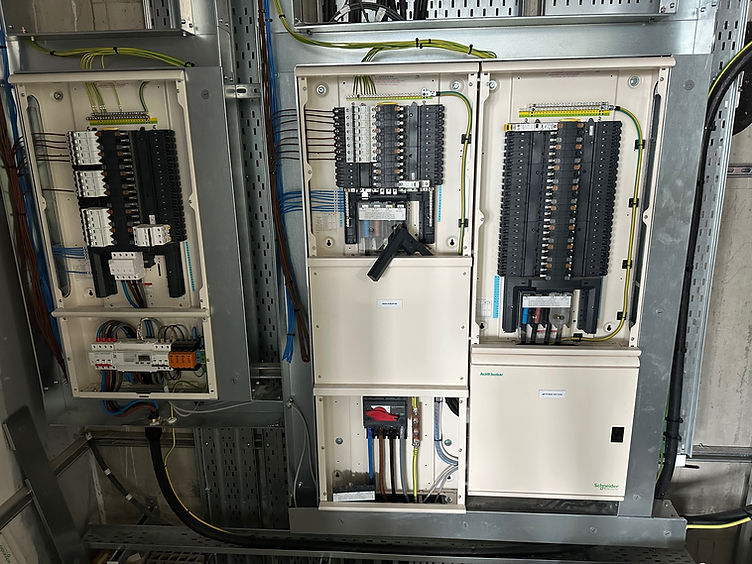
Distribution, isolation and metering
Typical situations
When domestic RCR is the right call
- You bought a house with solar and no handover documentation.
- The original installer has stopped responding.
- You are considering adding a battery and want to know if the existing system supports it.
- You want an independent view before making a claim.
The report
What an RCR report contains
Written to be acted on: what is installed, what was observed, and what follows from it.
- 01
Asset summary
What is installed, where, and the documentation that exists for it.
- 02
Observed condition
What the inspection found, recorded against the asset rather than as a generic narrative.
- 03
Findings and actions
The issues identified and what needs to happen about them, prioritised so it can be budgeted.
- 04
Recommended next steps
Where further investigation, remedial work or monitoring is the appropriate response.
Part of Greentech
A service inside the parent business
RCR findings frequently become remedial or upgrade work. Because Greentech delivers the electrical and renewable infrastructure behind the asset, the report and the work that follows it sit with the same contractor.
Questions
Common questions about RCR
Do you inspect systems you did not install?
Yes. A significant proportion of RCR work is on assets installed by other contractors. We inspect what is there and report on it on its own terms.
Is an RCR a legal requirement?
No. RCR is a condition reporting service, not a statutory inspection. It complements, and does not replace, any statutory testing, certification or maintenance obligation that applies to your installation.
Can you carry out the remedial work you identify?
Yes. We can quote for remedial works following the report. You are under no obligation to instruct us.
How long does it take?
It depends on the size and number of assets. We confirm the scope and the expected turnaround when we receive your enquiry.
Do you cover multiple sites?
Yes. Portfolio enquiries are welcome and are typically reported so each site can be compared on a consistent basis.
Will you tell me the system is fine if it is not?
No. The report records what was observed and states the actions that follow from it. Where something needs further investigation, the report says so.
An RCR is a condition report based on the inspection carried out on the date of attendance. It describes observed condition and the actions that follow from it. It is not a certificate of safety, a guarantee of performance, or a substitute for statutory testing, structural survey or specialist investigation.
Deeper RCR detail on the dedicated RCR site
Domestic booking and the fuller homeowner detail are held on the dedicated Greentech RCR site. It is the same service, delivered by the same engineers.

Next step
Book an RCR inspection
Tell us what is installed and where. We will confirm the scope of the inspection and what you will receive.